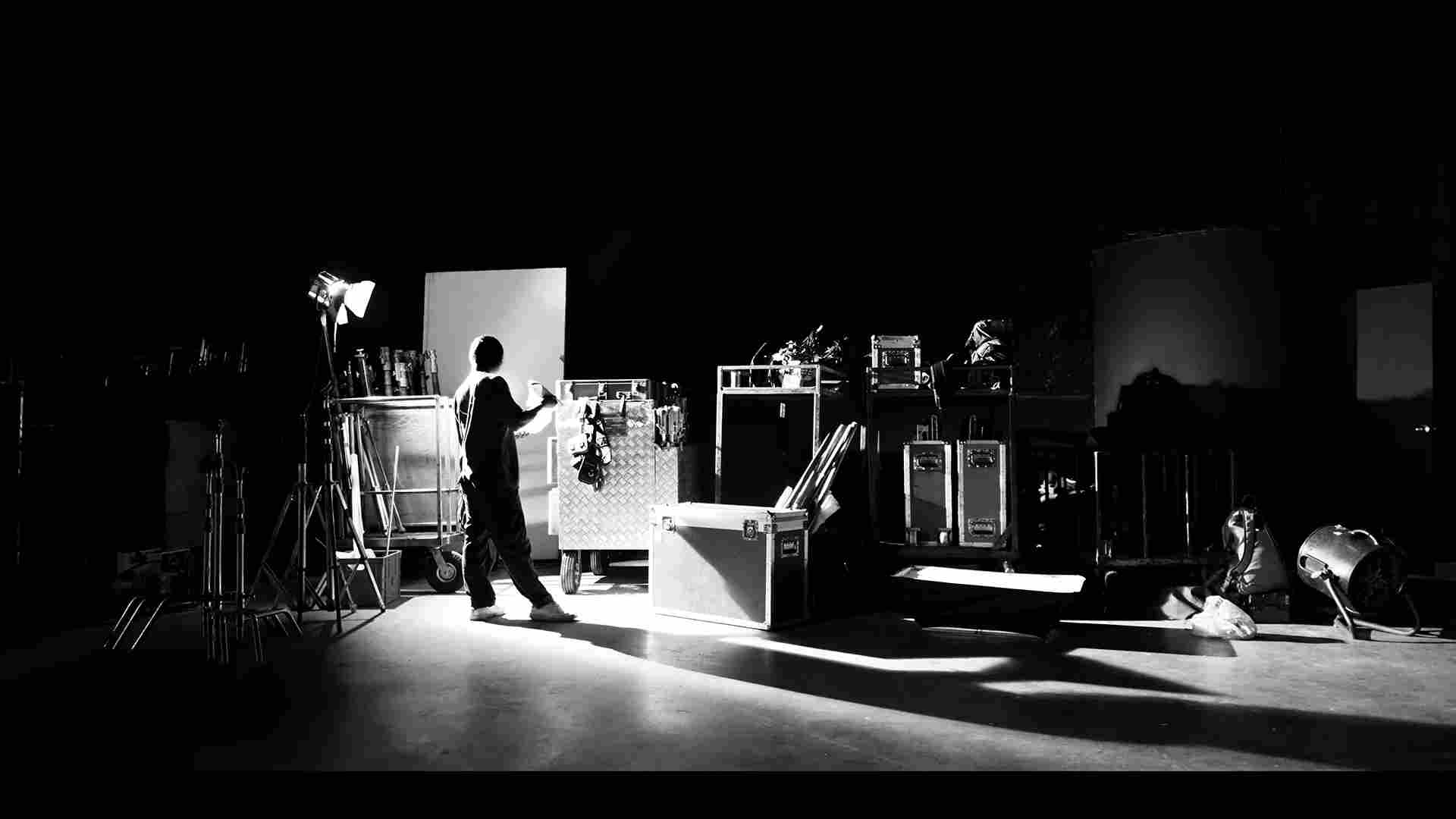
Mall Plovdiv's 'The Door' experiential campaign by The Smarts transformed a freestanding door into a participation-based prize mechanic in Plovdiv, Bulgaria,

Mall Plovdiv Turns a Single Door Into a Retail Game
Mall Plovdiv's "The Door" is an experiential retail activation created by Sofia-based agency The Smarts and launched in Bulgaria in April 2019, in which a freestanding door counted each person who opened it and awarded a prize to every tenth participant.
The campaign stripped retail promotion down to its most elemental mechanic: a physical threshold, a counter, and a sequence. Shoppers at Mall Plovdiv encountered a standalone door — no walls, no context beyond the object itself — and the act of opening it became the entire campaign. Each opening advanced an internal count, and the tenth person in any sequence won a reward. The simplicity was deliberate. As documented by clapboard.com and adsoftheworld.com, the activation is classified as an in-mall experiential format, and one media asset captures the installation in the archive record.
Mall Plovdiv occupies approximately 22,000 square metres of gross leasable area across 107 units, according to data reported by Amcham Bg, placing it as the second-largest of Plovdiv's three principal retail centres. The campaign's geographic market is Bulgaria's second city, where mall competition intensified markedly after Plovdiv Plaza — at approximately 43,500 square metres the dominant scheme in the city — opened in 2018, per amcham.bg. Against that backdrop, The Smarts and Mall Plovdiv needed a promotional idea that could cut through without relying on media spend alone. "The Door" answered that brief by making the mall itself the medium and each visitor a potential winner, converting routine foot traffic into an active participation loop consistent with broader experiential campaign thinking in European retail marketing.
Mall Plovdiv pursued a participation-based model as a direct strategic counter to conventional luck-based retail promotions. The campaign concept, as noted in the archive record at clapboard.com, positioned counting-based gaming as a response to low consumer engagement with standard prize draws — a format in which shoppers have no agency and therefore little incentive to act. By making participation itself the qualifying condition, The Door converted passive visitors into active contestants.
The strategic context in Bulgaria was meaningful. According to cwforton.com, Bulgarian shopping-centre stock reached 817,200 square metres in the fourth quarter of 2019, with Sofia accounting for approximately 411,400 square metres of that total, or roughly half the national supply. Plovdiv's three principal malls together represented approximately 86,000 square metres of gross leasable area, per amcham.bg, a market in which Mall Plovdiv held an estimated 25.6 per cent share according to figures reported by amcham.bg and Fara Bg. Plovdiv Plaza, which opened the year before the campaign, held approximately 50.6 per cent of the local market, per amcham.bg, making it the dominant competitive force Mall Plovdiv faced directly. Markovo Tepe Mall represented the third competitive presence in the city. Within that three-way market, differentiation on experience rather than on scale or tenant mix was a logical strategic position for the smallest of the three centres.
The Smarts, founded in 2008 by Gergana Ivanova and Radoslav Bimbalov according to Thesmarts Eu and prnew.info, had an established relationship with Mall Plovdiv by 2018, and their portfolio for the client included prior activations documented by thesmarts.eu as "The Red Phone" and "Almost Real ATM," suggesting a recurring commitment to promo activation built around physical surprise rather than media-led awareness. In Bulgaria's retail environment, where experiential campaign formats remained less saturated than in Western European markets, this approach carried a plausible claim to novelty.
The creative execution of "The Door" rests on the discipline of reduction. The Smarts designed a freestanding door — a self-supporting physical object requiring no surrounding architecture — fitted with an internal counting mechanism that tracked each opening and reset the prize sequence automatically. The object functions simultaneously as sculpture, game device, and brand communication, requiring no copy, no screen, and no staff explanation to operate.
The design logic is consistent with a strand of European experiential work that treats the installation as its own media channel, trusting the physical encounter to generate curiosity and word-of-mouth rather than relying on paid amplification. For a mall marketing context, the format is particularly well suited: foot traffic is already present, dwell time is measurable in minutes rather than seconds, and a freestanding object placed in a circulation route commands attention through physical incongruity alone. A door with no wall attached is, by definition, an object that demands a second look.
The montages captured in the single archived media asset, as documented by adsoftheworld.com and clapboard.com, present the installation in situ within the mall environment, showing the door as visitors encounter it. The visual record emphasises the object's isolation — its lack of surrounding context is the point. Production credits for "The Door" are not publicly documented in any source consulted, including thesmarts.eu, adsoftheworld.com, thecreativesroom.com, or clapboard.com, so individual director or creative director attribution cannot be confirmed. What the archived asset does confirm is that the installation was realised as a physical retail environment object, not a digital or screen-based execution, and that the counting mechanism was integral to the structure rather than a secondary add-on.
No verified performance data for "The Door" is publicly available. As confirmed by clapboard.com and adsoftheworld.com, no sales lift, foot traffic uplift, participation volume, return on investment, or media spending figures have been disclosed for the campaign. No coverage has been identified in trade publications including Campaign, Ad Age, Adweek, The Drum, or Contagious, and no entries or shortlists are documented at Cannes Lions, the Effies, The One Show, D&AD, the Clios, or the Webby Awards, per the archive record at clapboard.com.
Structural analysis in the absence of metrics nonetheless points to several coherent effectiveness signals. The mechanic is frictionless — opening a door requires no registration, no purchase, and no digital device, which in a Bulgarian retail context removes all practical barriers to participation. The tenth-person sequence creates genuine tension for every participant, because each opener knows they are either closer to or further from the prize without knowing the precise count, sustaining engagement across the duration of the activation. The format also generates inherent social observation: bystanders watching someone open the door become candidates for the next sequence, expanding the participation radius beyond the individual to the crowd.
"The Door" by Mall Plovdiv receives a Clapboard Score of 63 out of 100, reflecting a well-executed and conceptually coherent experiential idea operating within the constraints of a single-market, single-asset campaign without documented amplification or measurable reach beyond the immediate installation site.
.webp)
Creative Collaboration Platform: The Backbone of Modern Creative WorkWhat is a creative collaboration platform?Clapboard defines a creative collaboration platform as the operational core for today’s distributed creative teams. This is not a collection of digital collaboration tools stitched together; Clapboard’s system





Understanding the Creative Production MarketplaceWhat is a Creative Production Marketplace?Clapboard defines a creative production marketplace as a structured ecosystem where brands, agencies, and production talent converge to execute video, advertising, and branded content at scale. Unlike the legacy agency or freelanREAD FULL ARTICLE

The Urgent Need for a Creative Production Operating SystemWhy Traditional Creative Production Models Break DownClapboard sees the creative production landscape shifting under pressure. Content velocity is no longer a buzzword—it’s a mandate. Modern advertising demands relentless output across dozens of channels, each wREAD FULL ARTICLE